
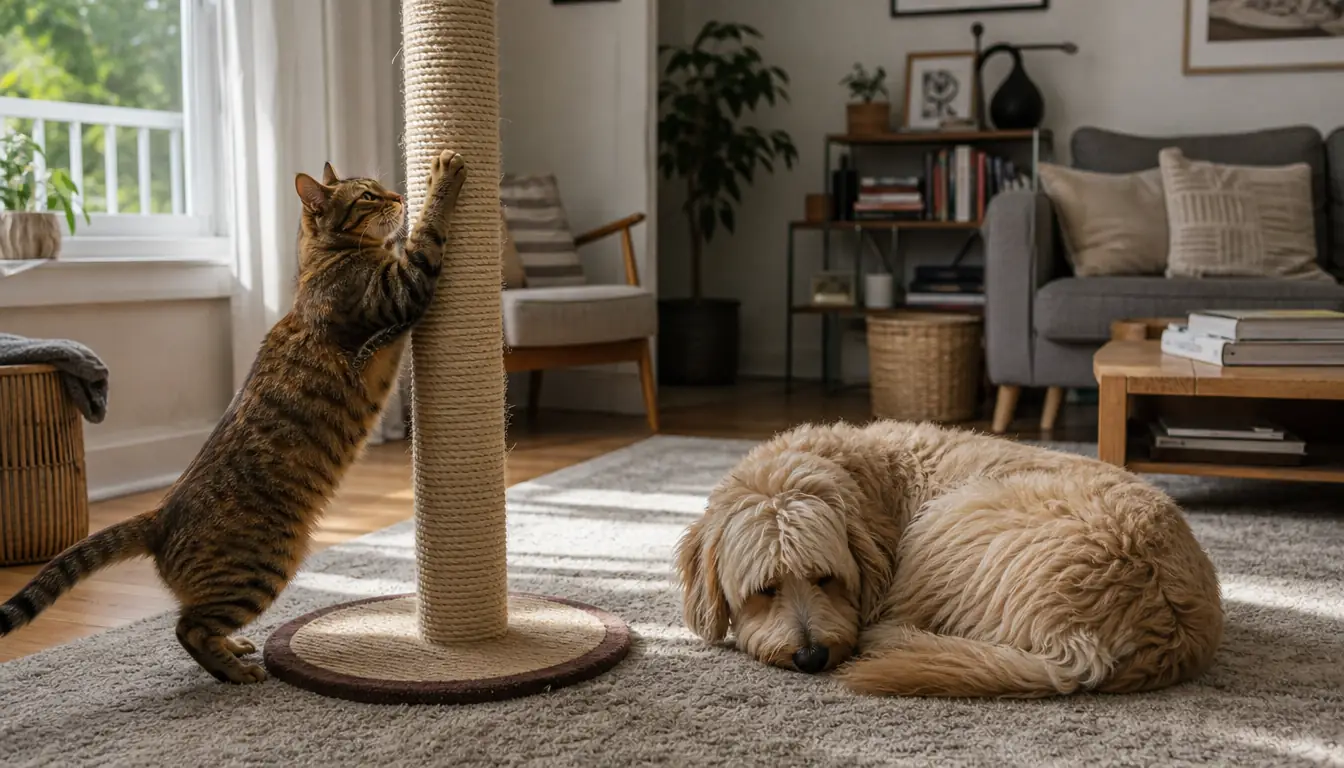
I did not set out to train Pepper to use a scratching post. I set out to save the arm of our living room couch, and the SmartCat scratching post is what finally worked. Pepper is a five year old short-haired tabby, indoor only, and she has strong opinions about everything, especially about where she is allowed to sharpen her claws. For months I tried cardboard scratchers, carpet scraps, and a sisal mat laid flat on the floor. She ignored all of it and kept going back to the couch.
Here is what I learned the hard way. Cats do not scratch to be difficult. They scratch to stretch their bodies, to mark territory, and to keep their claws healthy. Pepper was not trying to ruin the furniture. She was doing exactly what a cat is supposed to do, and I was asking her to stop without ever giving her a better option. The answer was not punishment. It was making the right spot more appealing than the wrong one. These five steps are the order I wish I had followed from the beginning, and they are the reason the couch finally survived a full year without new damage.
The Post That Finally Won Pepper Over
The SmartCat scratching post is the tall sisal tower that ended our couch wars. It is the one Pepper actually uses every day, and it is the one I would buy again in a heartbeat.
Amazon Check Today's Price on Amazon →Why Cats Scratch (And Why Punishment Backfires)
Scratching is not a bad habit. It is a built-in behavior that every cat needs. When Pepper scratches, she is stretching her back and shoulders, working the outer layer off her claws, and leaving both a visual mark and a scent mark from the glands in her paws. It is communication and maintenance at the same time. If you take away every acceptable place to scratch and offer nothing in return, the cat will find their own spot, and it will almost always be the couch, the rug, or the curtains.
That is why punishment does not work. If I yelled at Pepper for scratching the couch, she did not connect the yelling to the scratching. She connected it to me being unpredictable, which made her more anxious. An anxious cat scratches more, because scratching is how they soothe themselves. The way out is not to stop the behavior. It is to move the behavior to a surface the cat likes better than the couch. A tall post wrapped in sisal fiber is exactly that kind of surface, because it feels closer to a tree trunk than anything else in the house.
Step 1: Put the Post Where the Cat Already Scratches
I made the classic mistake with my first cardboard scratcher. I put it in a quiet corner where it looked tidy, and Pepper never touched it. Cats are creatures of habit. They scratch where they already scratch, not where you decide they should scratch. So spend a couple of days watching your cat and note the exact spots. For Pepper it was the left arm of the couch, the corner of the stairway wall, and one leg of the kitchen table.
The SmartCat post is tall, about 32 inches, which matters because Pepper likes to stretch all the way up when she works her claws. I placed it right next to the couch, close enough that she could reach it from her usual spot. It looked a little awkward at first, and I did not care. I would rather have an awkward corner than a shredded couch. Within a week she was using the post more than the arm of the furniture, and location alone did more than any treat ever did.
A note on placement: do not hide the post behind a door or in a laundry room. Cats scratch in the rooms where they spend time, especially near where they sleep and where the family gathers. The living room is not a compromise. It is the whole point. If the post is convenient, the cat will use it. If it is out of sight, it is out of mind, for cats and for people.
Step 2: Make the Post More Interesting Than the Furniture
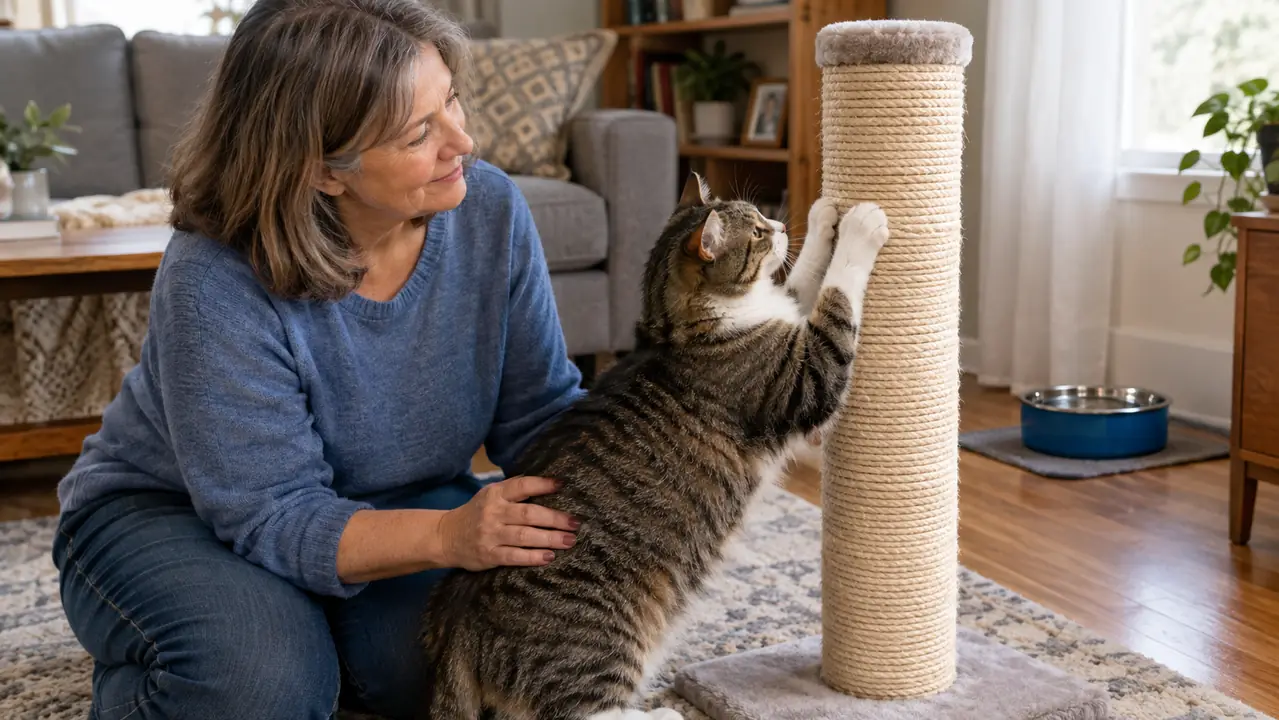
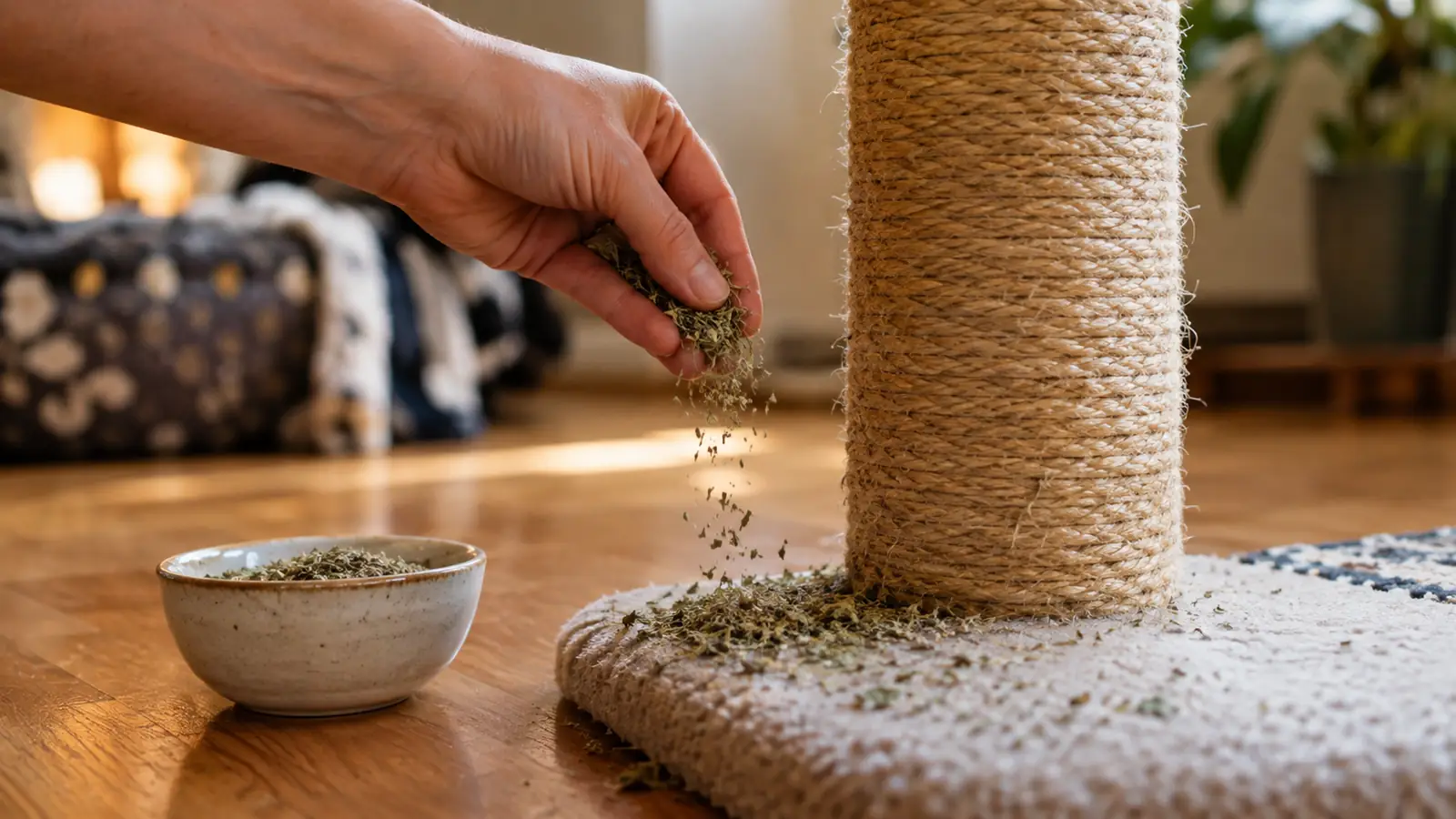
The couch had two big advantages over a brand new post. It smelled like us, it was soft, and Pepper had been scratching it for months. A new post is just a new object until the cat decides it matters. So I made the post worth investigating. I rubbed a little catnip into the sisal fibers, and I dangled a toy on a string near the base until she pounced on it. Every time she touched the post, even by accident, I said 'good girl' in a calm voice and gave her a tiny treat.
The sisal fiber on the SmartCat post is rough in the way cats like. It gives them something to really dig into, which is why Pepper took to it faster than she ever took to cardboard. Cardboard shreds and falls apart within a few weeks. Sisal holds up and feels like a real tree. If your cat is picky, sprinkle catnip on the post a few times over the first week and play with them near it. You want the cat to connect the post with fun, not with being picked up or moved around.
I also learned to scratch the post myself. Running my fingernails down the sisal made the exact sound Pepper already loved, and she watched me do it like I had finally figured something out. That sounds silly, but cats learn by watching. Biscuit, our shepherd mix, watched too, and after a while the whole routine became normal household business. The dog ignored the post, the cat used it, and I stopped losing sleep over the couch.
Step 3: Redirect, Never Punish
The moment I caught Pepper scratching the couch, my first instinct was to clap or shout. I am glad I stopped myself, because punishment makes a cat nervous, and a nervous cat scratches more, not less. The better move is redirection. The second I saw her claws go into the couch, I walked over calmly, picked her up, and set her down in front of the post. Then I scratched the sisal with my fingernails to show her what it was for.
Timing matters more than technique. You have a second or two after the cat starts scratching before they move on to something else. If you redirect in that window, the cat starts to connect the post with the urge to scratch. If you wait, they have already finished and the lesson is lost. I kept a small bag of treats near the couch for the first two weeks so I could reward her the instant she touched the post after a redirect.
It also helps to interrupt the furniture scratching before it starts. When I saw Pepper crouch and reach toward the couch arm, I would pat the sisal post and say her name. Half the time she would switch targets on her own. She was not being stubborn. She was just following the most convenient option, and I was slowly making the post the most convenient option in the room.
Step 4: Protect the Old Spots While the New Habit Forms
You cannot offer a better option and hope the cat forgets the couch overnight. While Pepper was learning, I covered the arm of the couch with a throw blanket and put double-sided tape along the corner she liked. Cats hate the sticky feeling on their paws, and it broke the habit without me ever raising my voice. I also kept a small flat scratcher near the stairway corner where she used to sharpen her claws.
For about two weeks I had tape on the couch, a blanket over the arm, and catnip on the post. It was not the prettiest living room we have ever had, but it worked. Once Pepper was going to the post nine times out of ten, I removed the tape and the blanket, and she stayed with the post. The habit had moved, and the couch was still in one piece. That is the whole goal of this step. Make the old spot unpleasant, make the new spot pleasant, and let the cat choose.
Do not leave the tape on forever, though. The point is to break the old habit, not to make the couch unusable. Once the cat has chosen the post for a couple of weeks, take the barriers down and watch. If they go back to the couch, put the tape back for another week and try again. Most cats just need a little time for the new habit to feel like the normal habit.
Two weeks of tape on the couch and catnip on the post, and Pepper stopped shredding the arm of the couch for good.
Step 5: Be Patient and Let the Cat Set the Pace
Every cat is different. Some figure it out in a day, and some take a month. Pepper took about three weeks to fully switch, and there were days I thought we were back to square one. The worst thing you can do is get frustrated and give up. Cats pick up on tension, and the more pressure you put on the process, the more they dig in. I kept the routine simple: the post stayed next to the couch, I refreshed the catnip weekly, and I never once scolded her for a slip.
If your cat is scratching more than usual, scratching in odd places, or scratching to the point of sore paws, ask your vet. I am not a vet, and I do not pretend to be one. Sometimes scratching is a sign of stress or a medical issue, and no amount of catnip will fix that. For a healthy cat with a normal scratching habit, though, these steps really do work. Give it a full month before you decide the post is a lost cause. That is the timeline that worked for us.
The reward at the end is worth the patience. Pepper still uses the SmartCat post every day, and the couch has not needed a single repair since. Biscuit has stopped trying to figure out what she is doing, and the living room finally feels calm. Training a cat is not about winning a battle. It is about giving the cat a better option and then getting out of the way.
What Else Helps
A few extras made the difference in our house. First, trim your cat's claws regularly. Shorter claws do less damage and are less tempting to file down, and most cats get used to it if you start slow and give treats. Second, remember that some cats prefer vertical scratching and some prefer horizontal. Pepper is a vertical girl, so the tall SmartCat post was perfect. If your cat scratches the carpet or the rug instead, they probably want a flat cardboard or sisal mat. You can keep both and let the cat decide.
Third, do not be afraid to have more than one scratching surface if your house is big. Cats like to scratch in the spots where they spend time, not just where you put the one post. We have the SmartCat post in the living room and a small sisal mat by the back door, and Pepper uses both. Fourth, make sure the post is stable. If a post wobbles, a cat will not trust it. The SmartCat post has a base that holds steady when Pepper leans into it, and that stability is half the reason she uses it.
Ready to Save Your Own Couch?
The SmartCat scratching post is the tall sisal tower that finally worked in our house. Put it next to the furniture, add a little catnip, and let your cat do the rest.
Amazon Check Today's Price on Amazon →