

When Pepper started sharpening her claws on the arm of our couch, I did what most people do: I bought the cheapest scratching post I could find. It lasted about three weeks before it wobbled, shed sisal all over the rug, and Pepper stopped using it entirely. The day I finally gave up on it, I found her stretched full length on the couch arm again, and I knew I had to do something different. So when I decided to compare the SmartCat 32-inch scratching post against a budget MECOOL post side by side for eight weeks, I wanted to answer one question: does the extra cost actually buy a post that lasts, or is it all brand name? I also wanted to know whether a taller post would change her behavior, because the cheap one was short enough that Pepper had to hunch to scratch it. That detail turned out to matter more than I expected.
I set both posts up in our living room in central Illinois on the same Saturday morning in March, about six feet apart, and let Pepper and Biscuit, our shepherd mix, do their worst. Pepper is a 5-year-old indoor tabby who is picky about everything, including the litter she will use and the bed she will sleep in, so I knew her verdict would be the one that counted. Biscuit is a 60-pound dog who has knocked over more cat furniture than I can count, mostly by accident when he chases a toy across the room. Between the two of them, they gave both posts a fair workout. I checked the posts every few days, took notes on wobble, sisal shedding, and which post Pepper chose first thing in the morning, and I kept both of them in the same spots for the whole eight weeks so the comparison would be honest. I also wrote down the first day Pepper chose one post over the other, which happened on the second Saturday of the test, and I kept the notes so I could look back at the whole eight weeks instead of trusting my memory. Biscuit knocked the cheap January post over twice in a single week, which is why I stopped trusting lightweight bases.
| SmartCat Scratching Post | MECOOL Scratching Post | |
|---|---|---|
| Height | 32 inches, a full stretch for most adult cats | About 24 inches, fine for kittens and small cats |
| Stability | Wide, heavy base held firm through eight weeks and one dog collision | Wobbled by week three, tipped over twice |
| Sisal wear | Light fraying after eight weeks, no loose piles on the rug | Visible shredding by week four, sisal dust along the baseboard |
| Top perch | Flat top wide enough for Pepper to sit and watch the yard | Narrow top, mostly a scratching surface |
| Assembly | No tools, about five minutes, one person | Fiddly base, still doable in ten minutes |
| Replacement parts | Replacement sisal posts are easy to find | Hard to find parts, most people replace the whole post |
| Up-front price | Costs more at checkout, built to last for years | Budget price, easy choice for a first post |
| Weight | Heavy enough to stay put, awkward to move upstairs | Light enough to carry in one hand |
| Best for | Multi-pet homes and cats that like a full stretch | Kittens, small cats, or a spare post for another room |
Where SmartCat Wins
The SmartCat post wins on stability, and that is the whole ballgame for a cat. A scratching post that wobbles makes a cat nervous, and a nervous cat goes back to the couch. The base on the SmartCat post is wide and heavy enough that Pepper can dig in with her full weight and the post does not shift even a little. I tested this on purpose one afternoon: I pushed the top of each post with the same amount of force, and the MECOOL post rocked immediately while the SmartCat post barely moved. Biscuit also bumped into the SmartCat post twice while chasing a toy across the living room, once hard enough that I heard the thud from the kitchen, and it stayed upright both times. That single difference is why Pepper kept using it, and it is the reason I would buy it again. The MECOOL post also shifted on the carpet whenever Pepper really dug in, something I only noticed when I sat down to watch her scratch one evening.
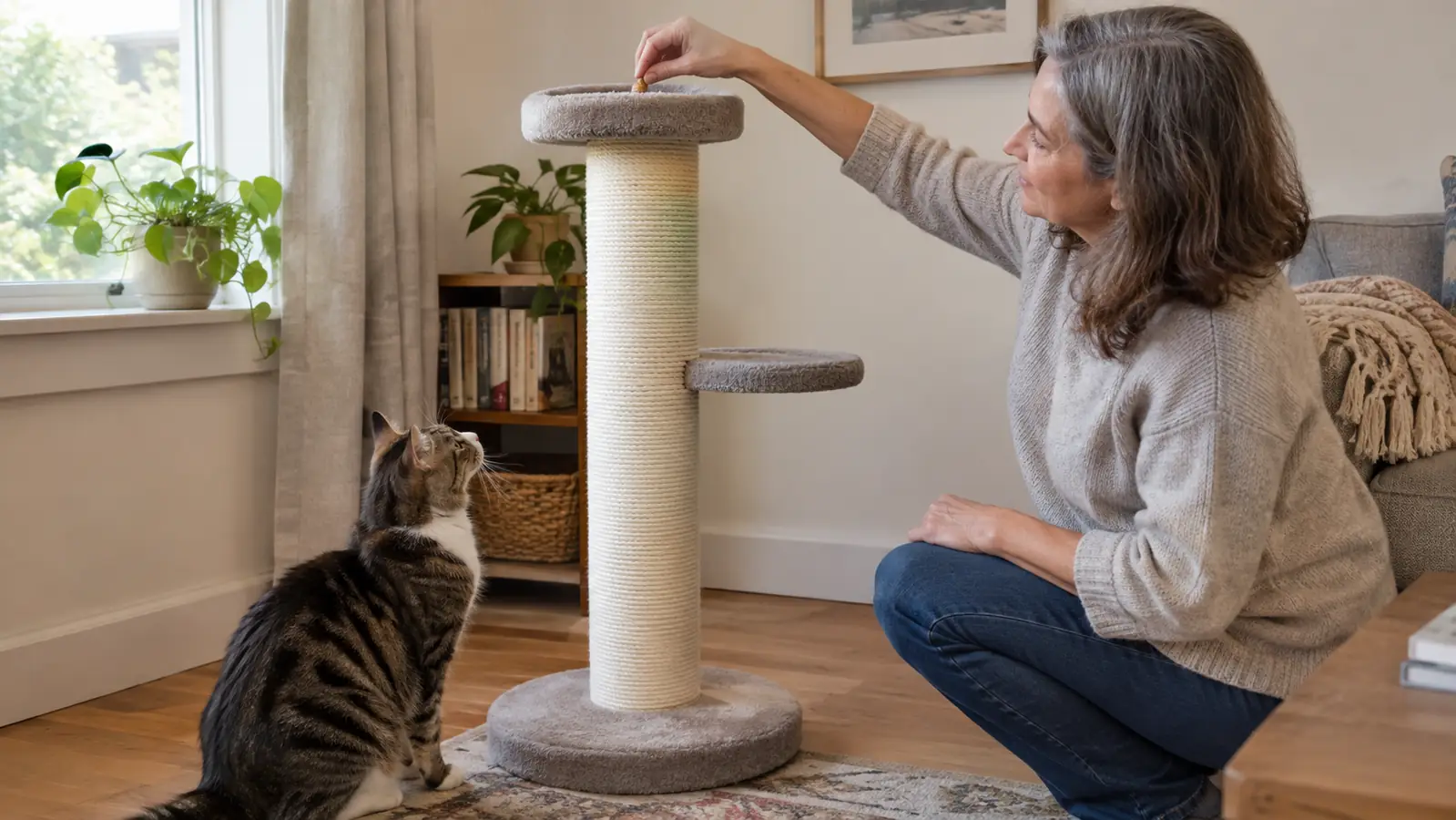
The 32-inch height matters more than I expected. Pepper is a long cat, and on the shorter MECOOL post she had to crouch slightly to reach the top, which meant she did not get the full-body stretch cats want when they scratch. On the SmartCat post she can rise up on her hind legs, dig her front claws in near the top, and pull down through a full arc. I watched her do it every morning around 7:15, right after breakfast, the same routine she used to save for the couch arm. The extra height also means the top ledge is high enough that she treats it as a perch. She sits up there to watch the birds at the feeder, which means the post does double duty as furniture instead of taking up floor space for one job. For a house our size, that matters.
The sisal held up better than I expected. After eight weeks of daily scratching, the SmartCat post shows light fraying where Pepper's claws land, but no loose strands and no piles of fiber on the rug. The cheap post I bought in January started shedding within a week, and I was sweeping sisal dust out of the carpet every other day. The MECOOL post did the same thing, just slower: by week four I could see bare patches forming where Pepper had scratched, and the fibers collected along the baseboard. On the Tuesday of week six, I ran my hand over both posts, and the MECOOL one left sisal dust on my palm while the SmartCat one did not. The SmartCat sisal is denser and wrapped more tightly, and it has not started to unravel even where Biscuit scratches at the base with his front paws. He insists on doing that even though he is a dog, and the carpet-wrapped base has taken the abuse without coming apart. I checked the base on the last day of the test and it still looks like the day I assembled it.
Assembly was the other surprise. I put the SmartCat post together by myself in about five minutes with no tools, which matters to me because I am not handy and Ray was out of town the weekend I set these up. The pieces fit together snugly, and the instructions were mostly pictures. The MECOOL post took about ten minutes and the base was fiddly, but it did go together without tools too. The bigger difference showed up over time: the SmartCat post has stayed tight, while the MECOOL post developed a small gap where the top section meets the post, and by week six it wobbled even when Pepper was not touching it. For a house with a heavy dog and a cat that scratches hard, that kind of looseness is what kills a post before the sisal ever wears out.
The carpet-covered base has been another quiet win. Biscuit likes to scratch at it with his front paws, the way a dog does before he lies down, and after eight weeks the carpet is still intact. On the MECOOL post, the base is a lighter material and it showed scuff marks by week three. I also like that the SmartCat base does not slide on the hardwood floor in our hallway. We have a rug in the living room, so the posts sat on carpet for most of the test, but I moved both into the hallway for a week to see how they behaved on wood. The SmartCat post stayed put. The MECOOL post slid a few inches every time Pepper scratched it, which is another small reason she gave up on it.
Where MECOOL Wins
I am not going to pretend the MECOOL post is a bad product. It is not. For a kitten or a small cat, it is a perfectly good first post, and the price is friendly in a way that matters when you are not sure your cat will even use a scratching post. When I added up what I spent last year on scratching posts that Pepper ignored, the total was embarrassing, and I understand why someone would start with the cheaper option. The MECOOL post is also the better choice if you are buying for a cat under a year old, because a kitten will outgrow a 24-inch post quickly and you will be buying a bigger one anyway. Start cheap, see if the cat takes to it, then upgrade when the kitten does.
The MECOOL post is lighter, and that is a real advantage if you need to move it. I carried it upstairs to the spare bedroom in one trip, and I carried it back down when Pepper ignored it up there. The SmartCat post is heavier and I would not want to haul it up and down stairs very often. If you want a second post for the bedroom or the basement, or if you rent and move often, the lighter MECOOL post is easier to live with. It is also easier to tip over, which is the tradeoff, but for a small cat that does not scratch with much force, that tradeoff is acceptable. I would not trust it in a house with a big dog, but not every house has a big dog.
The MECOOL post also survived eight weeks without falling apart completely, and I want to be fair about that. It wobbled, and it shed more sisal than I liked, and Pepper stopped using it by week four, but it did its job for a while. On a Monday morning in week five I found it tipped over on the floor, and I am fairly sure Biscuit knocked it over while chasing a toy, but it did not break. For a cat who is not a heavy scratcher, or for a home with no 60-pound dog crashing around, it might last a good long time. The honest summary is that MECOOL wins on price, on weight, and on being good enough for lighter use, while SmartCat wins on everything that keeps a cat coming back day after day. That is not a knock on MECOOL; it is just a difference in what the two posts are trying to do.
Cleaning was easier on the MECOOL post, since the lighter base lifted off the floor and I could sweep under it. The SmartCat base is heavier and I have to shove it aside to vacuum. It is a small thing, but I vacuum every day because of Biscuit's fur, so I notice it. If you have a shedding dog and a tight corner, that is worth knowing before you choose.
The post Pepper still uses after eight weeks
If you want a scratching post that does not wobble, gives your cat a full stretch, and still looks decent after two months of daily use, this is the one I kept in the living room. Pepper scratches it every morning and Biscuit has not knocked it over once.
Amazon Check Today's Price on Amazon →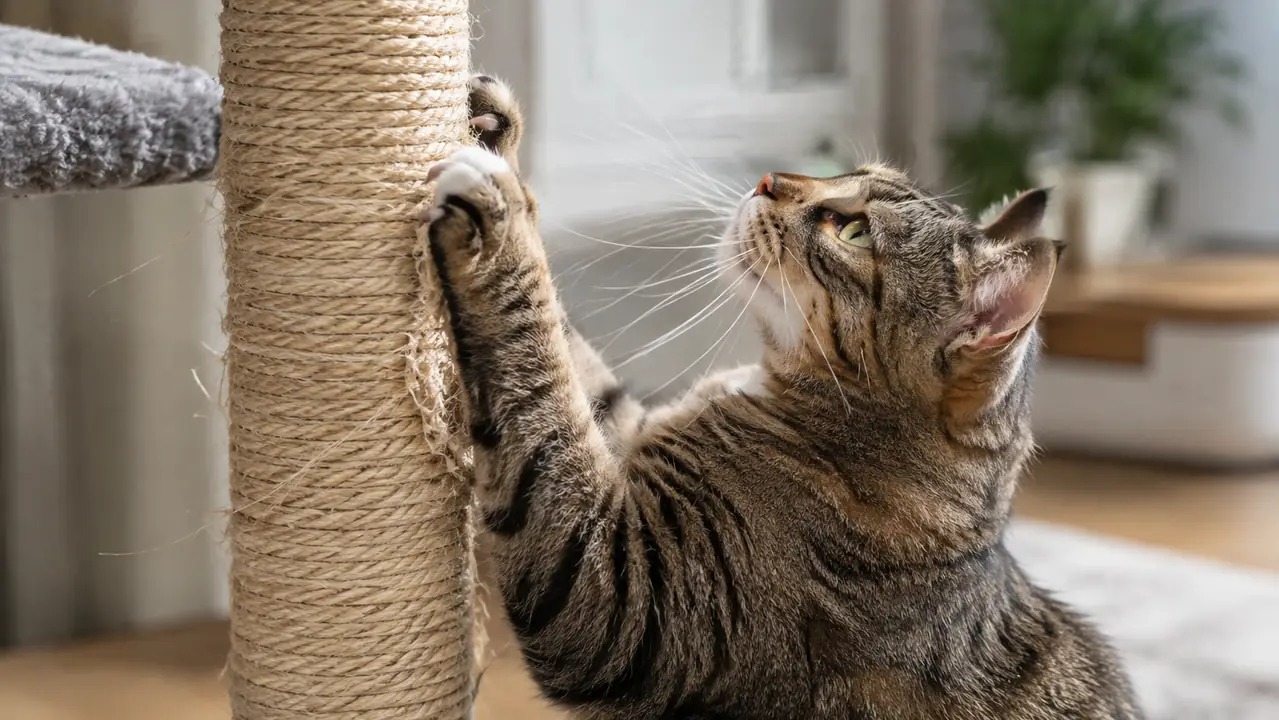
Who Should Buy Which
Buy the SmartCat post if you have a cat that scratches a lot, a multi-pet home, or furniture you are tired of defending. It costs more up front, but a post that lasts years and actually gets used is cheaper than a couch arm. I have the reupholstery estimate to prove it, and I would rather replace a sisal post every few years than argue with Pepper about the arm of the chair again. If your cat is the type that scratches first thing in the morning, stretches tall, and has a favorite spot near the window, the taller post gives them what they are looking for. It also survives a household where a 60-pound dog shares the living room, and that is a short list of cat posts. Ray, who was skeptical about spending more on a cat post, changed his mind the first time he saw Pepper stretch full length on it.
Buy the MECOOL post if you have a kitten, a small cat, or a tight budget and you are willing to replace the post in a year. And if you are not sure your cat will use any post at all, start with the cheaper one, just know that Pepper ignored hers within a month. One more thought: whatever you buy, put it next to the spot your cat is already scratching. That placement did more to save our couch than the brand of post did. I moved the SmartCat post to within a foot of the couch arm Pepper liked, and she switched over in about two days. The post itself matters, but location matters almost as much. If you end up with the wrong one, you are not stuck; we kept the MECOOL post in the basement as a backup, and it is ready to move to whatever room Pepper is fixated on next.
The one I would buy again tomorrow
Eight weeks in, the SmartCat post is still the one Pepper stretches on every morning, and Biscuit has not knocked it over once. If you want the same result without the guesswork, this is the one to grab.
Amazon Check Today's Price on Amazon →