
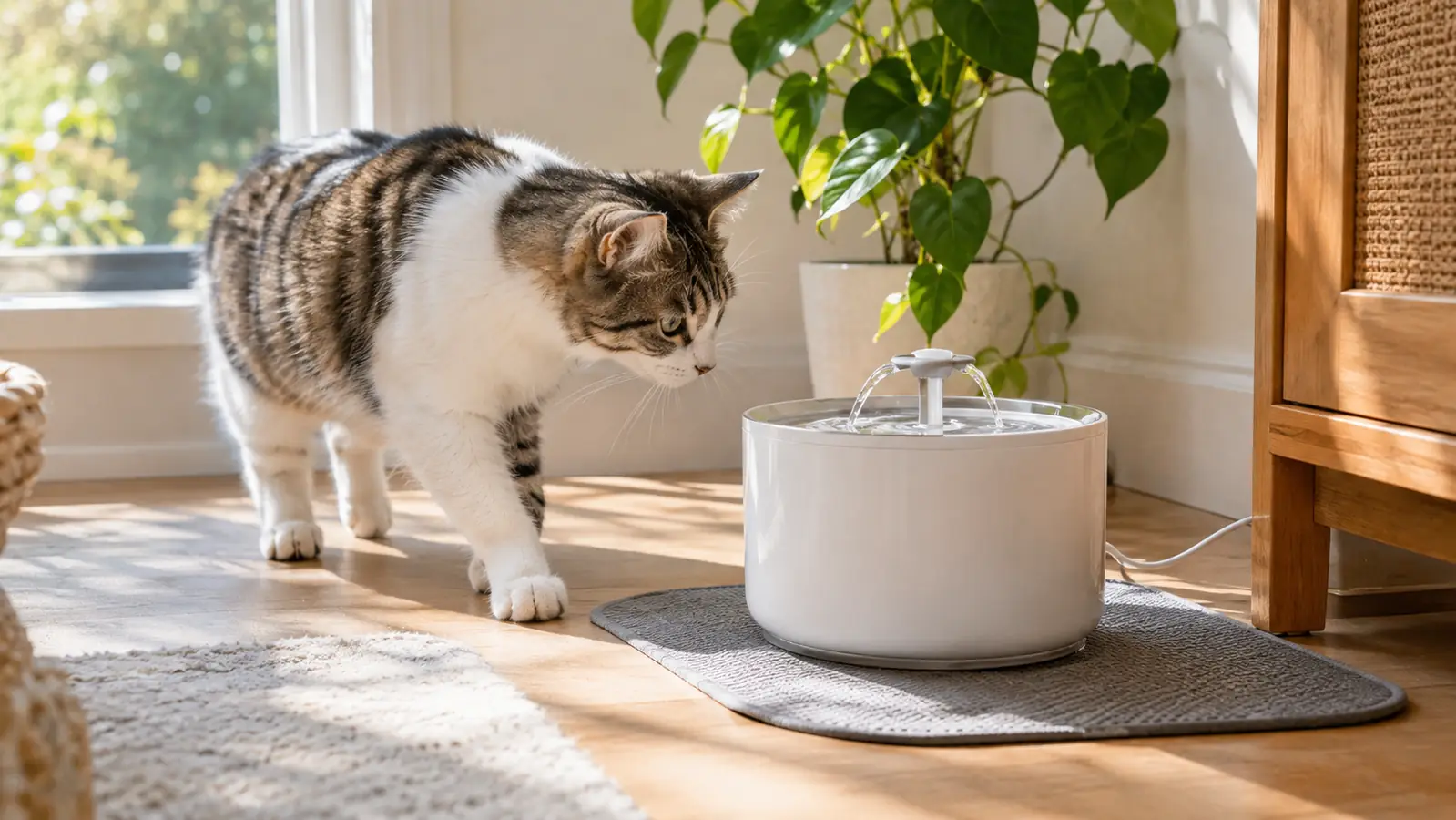
Pepper is picky about everything. Our 5-year-old tabby has opinions about which litter she will use, which chair is hers, and which end of the couch she claims after dark. So I shouldn't have been surprised that she also had opinions about water. For months she ignored the stainless bowl I refilled every morning, took one polite lap, and walked away.
It worried me more than the litter box standoffs. Indoor cats don't always drink enough, and I knew the stories about kidney trouble down the road. Biscuit, our 60-pound shepherd mix, was doing his part to keep the bowl empty, mostly by sloshing water across the kitchen floor. Pepper just wasn't interested. That's when I started reading about cat water fountains, and the Veken 95oz/2.8L Cat Water Fountain kept showing up in every conversation.
I'll be honest: I didn't think a fountain would fix a cat who had already decided she wasn't thirsty. But it did, and it took about a week. Here's exactly how I got an indoor cat drinking with a Veken fountain, step by step, including the parts that almost made me give up.
Before I ordered one, I asked our vet if a fountain was worth trying for a cat who wasn't obviously sick. Her answer was simple: anything that gets an indoor cat drinking more is worth trying. Cats evolved from desert animals, she reminded me, and they don't always feel thirsty the way we do. That was the push I needed.
The day the Veken arrived, I almost second-guessed myself. Pepper had a perfectly good water bowl, and she was not dehydrated enough to need a hospital visit. But not dehydrated enough to be sick is not the same as drinking enough. For an indoor cat, water intake is one of those quiet things that catches up with you later. I decided to give the fountain a fair shot before judging it.
The Fountain That Finally Got Pepper Drinking
The Veken 95oz/2.8L Cat Water Fountain holds 2.8 liters, runs quietly, and filters the water so it stays fresh between refills. It's the one that worked here after a bowl, patience, and a very stubborn tabby all failed.
Amazon Check Today's Price on Amazon →Why Pepper Wasn't Drinking Enough
Before I bought anything, I watched Pepper for a week. Cats are creatures of habit, and indoor cats especially have their reasons. Her bowl sat at the edge of the kitchen, right where Biscuit thundered past twenty times a day. The water sat for hours, picked up dust and the occasional floating fur, and by afternoon it probably tasted stale. I was doing what I thought I was supposed to do, and she was still walking away.
The bigger issue was that moving water is interesting to a cat in a way still water isn't. In the wild, running water tends to be cleaner than a puddle. A fountain keeps water moving and cycles it through a filter, so it stays fresher than a bowl that just sits there. Pepper needed a reason to drink, and the bowl wasn't giving her one.
One more thing I learned: cats can be picky about the taste of tap water, and about the bowl material. Some cats dislike plastic bowls. Pepper's old bowl was stainless steel, which most cats tolerate fine, so I didn't blame the bowl. The problem was the water itself, and the way it just sat there.
Step 1: Watch Before You Change Anything
Before you buy anything, spend a few days just watching. Where does your cat actually go when she's thirsty? Does she use her bowl, or have you caught her at the bathroom faucet, or lapping from a glass on the nightstand? Pepper's favorite water source turned out to be Ray's bedside glass. That told me she wanted fresh, interesting water, not the stale bowl in the kitchen.
Notice the location too. If the bowl sits right next to the food, some cats barely touch it because they don't like the smell of food near their water. If it sits near the litter box, that's even worse. Pepper's bowl was in the middle of our busiest room, and she hated every second of it. The fix wasn't just a new fountain. It was also a better spot for it.
I also started paying attention to how much Pepper was actually producing in the litter box. I know that sounds odd, but the number of clumps per day is the easiest way to tell if a cat is drinking enough. When I counted, hers were few and small. That gave me a baseline so I could tell, a couple of weeks later, whether the fountain was making a real difference.
Step 2: Choose a Fountain That Matches Your House
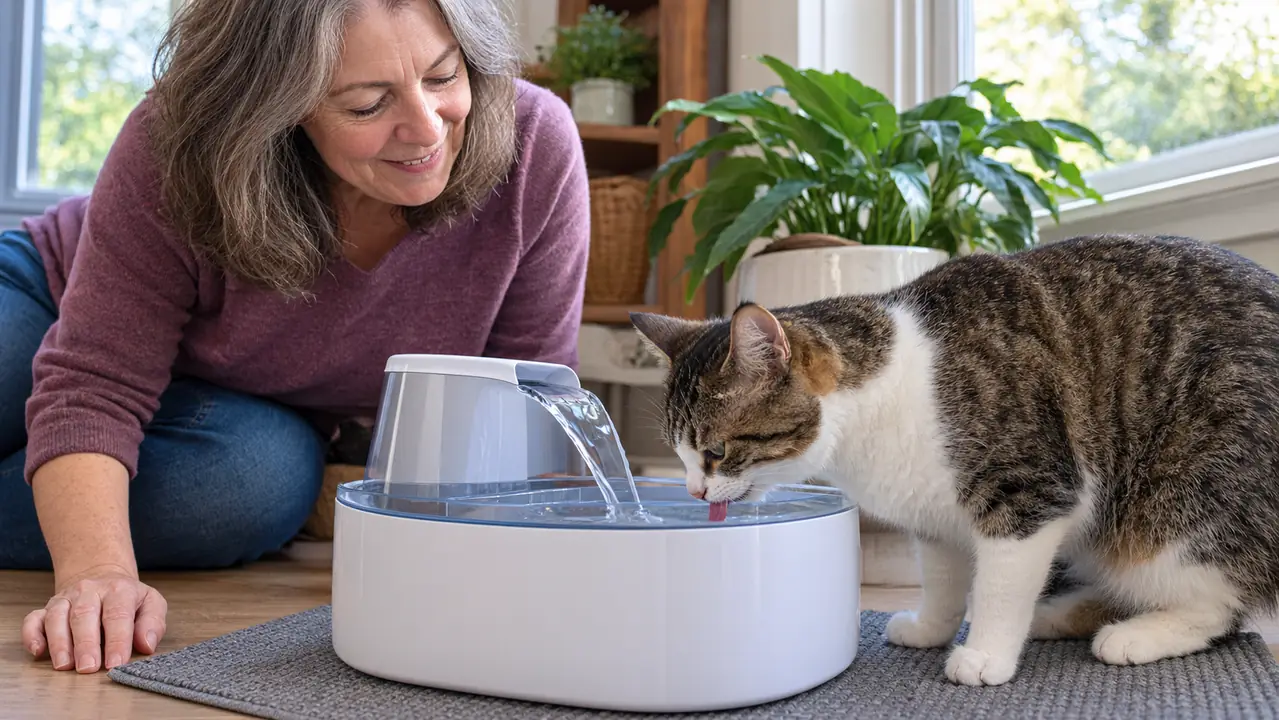
Once I knew Pepper wanted moving water, I looked for a fountain that could survive this house. The Veken 95oz/2.8L Cat Water Fountain kept coming up, and the reasons were practical. It holds 2.8 liters, which matters when a 60-pound dog drinks like he just crossed a desert. I didn't want to refill a tiny reservoir three times a day.
The Veken is also quiet, and that mattered more than I expected. Our house is small, and a gurgling pump in the corner would have driven me and Ray crazy. This one runs softly, and the filter catches fur and debris before they float back into the water. In a shedding household like ours, that filter is half the reason the cat will actually use it.
I also liked that this model is an innovation award winner, which mostly told me other people had already tested it and found it worked. With more than 44,000 reviews, you can find the complaints too. Some people say the pump needs regular cleaning, and they're right. A fountain is not a set-it-and-forget-it gadget. You are signing up for filter changes and the occasional pump scrub. The Veken comes with filter replacements, and I buy extras so I never run out. For us, that small routine was worth it because Pepper was actually drinking.
Step 3: Set It Up Before You Introduce It
Don't fill it, plug it in, and drop it in front of a skeptical cat. Set it up first. I rinsed every part, filled the reservoir, plugged it in, and let it run for an afternoon in the laundry room with the door closed. That did two things: it flushed out any dust from manufacturing, and it gave me a chance to confirm the pump was quiet before Pepper ever saw it.
Placement is half the battle. I put the Veken in a low-traffic corner of the dining room, away from the food bowls, away from the litter box, and away from Biscuit's favorite route through the house. Pepper needed to feel safe approaching it. The first time she heard the water running, she stopped, stared, and sat down to watch it for ten minutes. I took that as a good sign.
The first time I let Pepper into the room with it, she did not drink. She circled the fountain twice, flicked her tail, and went to sit in the hallway. Biscuit, on the other hand, walked right over and drank like it was his birthday. That didn't help. Pepper is suspicious of anything the dog likes first. I had to remind myself that this was going to take time.
Step 4: Keep the Old Bowl and Let Her Decide
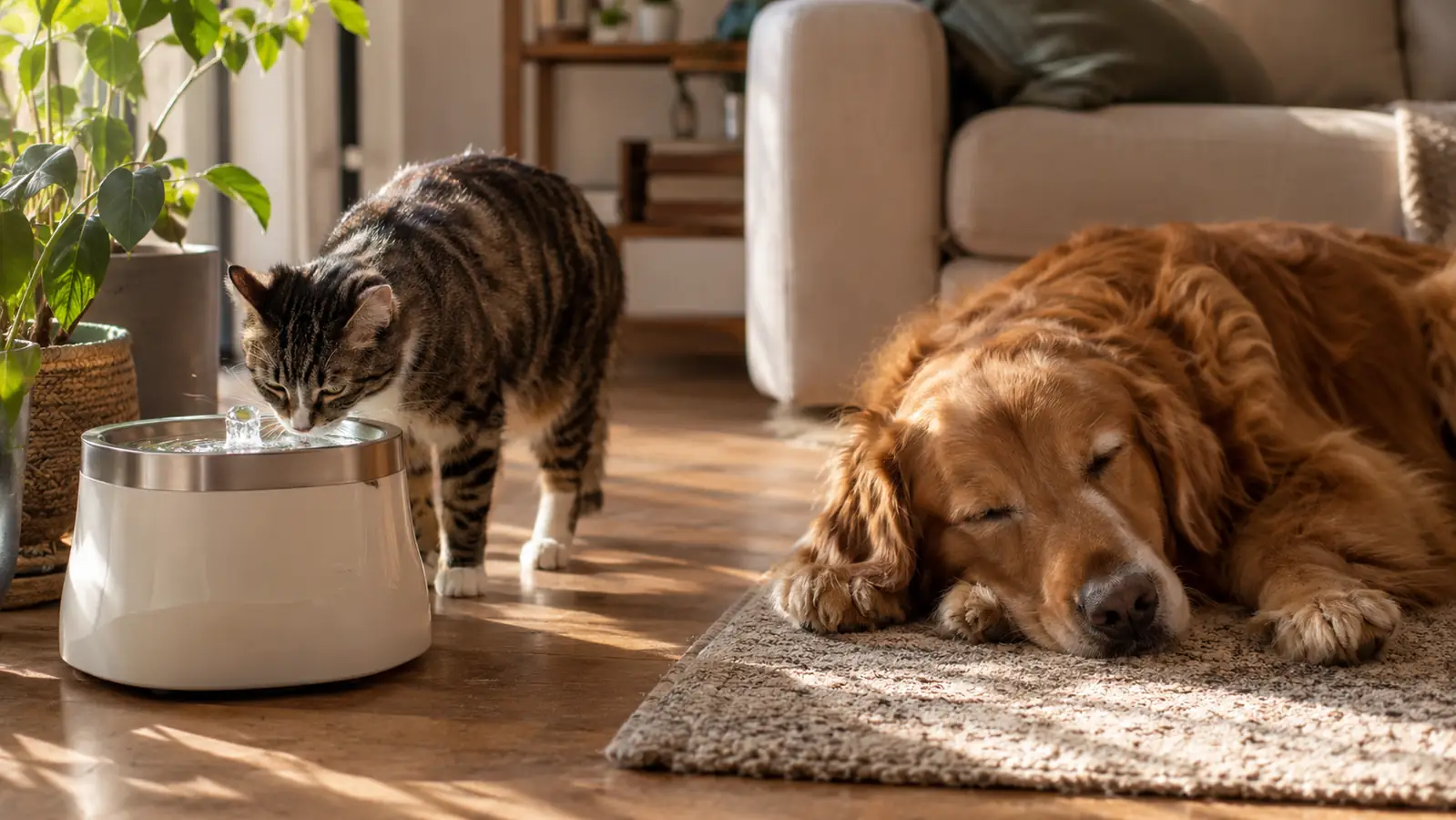
Here's where I almost gave up. For the first two days, Pepper treated the Veken like a suspicious new appliance. She would watch the water fall, sniff the air, and walk off. I kept the old bowl out, right next to the fountain, because the fastest way to make a cat drink less is to take away the only water source she trusts. She still used the bowl, just a little less every day.
On day three I noticed she was drinking from the fountain's basin when she thought nobody was watching. On day five she was using it like it had always been there. The trick was patience and no hovering. Every time I crouched down to watch her, she walked away. When I left the room and let her investigate on her own schedule, she figured it out.
One thing that helped: I kept the water level topped off so the flow stayed steady. Cats notice when the stream weakens. With the Veken's 2.8-liter reservoir, I only had to top it off every couple of days, which is the whole point of a fountain in a two-pet house.
Step 5: Clean It on a Schedule or the Cat Will Notice
The fountain works because the water moves and gets filtered. It stops working when the pump picks up fur or the filter gets sludgy. I clean the whole thing once a week: pump apart, reservoir rinsed, filter swapped every two to four weeks depending on how much Biscuit has shed into it. It takes about ten minutes, and it's the difference between a fountain your cat uses and a fountain your cat ignores. And if the pump ever starts making noise, check the water level first. When the reservoir runs low, it sucks air and sounds like a tiny lawnmower. Topping it off fixes it.
I can tell when I've slacked off, because Pepper goes back to ignoring it and starts staring at Ray's water glass again. That's her way of telling me the water doesn't taste right. A quick clean and a fresh filter, and she's back at the fountain the same day. A picky cat turns out to be a great maintenance reminder.
Watch for signs that it's working. Within two weeks, I was filling the reservoir noticeably more often, and the litter box told the same story. If you're ever worried your cat still isn't drinking enough, ask your vet. I'm not a vet, just a person with a picky cat and a fountain that finally won her over.
What Else Helps
A fountain did the heavy lifting here, but a few other things helped Pepper drink more. She gets wet food once a day, which adds water to her diet. I keep a second, plain bowl of fresh water in the bedroom, because cats like options. And yes, Ray still has to guard his water glass. Some habits never die.
If your cat is older or has health issues, talk to your vet about how much water she should be getting. Dehydration in cats can be sneaky, and the signs, like less energy or less frequent litter box use, are easy to miss. A fountain is a tool, not a medical treatment. It just happens to be the tool that got Pepper drinking.
One more note: don't be discouraged if your cat ignores the fountain for the first few days. Pepper took a full week. Leave it running, keep the old bowl nearby, and let her decide on her own timeline. Cats would rather believe it was their idea anyway.
I know some people worry that a fountain is more work than a bowl. Honestly, it's about the same. I was already rinsing Pepper's bowl every day. Now I rinse the fountain once a week and swap a filter every few weeks. The daily chore I used to do is gone, and Pepper drinks more than she ever did from the bowl.
One more thing that helped in our house: I stopped expecting Pepper to drink on a human schedule. She does most of her drinking at night, when the house is quiet and the fountain is the only sound in the kitchen. If your cat is the same way, you might never see her drink. Check the reservoir level instead. A dropping water line is proof enough.
It took Pepper a full week to trust the Veken fountain. Once she did, I started filling the reservoir twice as often.
Give Your Picky Cat an Easier Reason to Drink
The Veken 95oz/2.8L Cat Water Fountain is the one that worked in our house. Set it up, keep the old bowl nearby, and give your cat time to decide it's hers.
Amazon Check Today's Price on Amazon →