
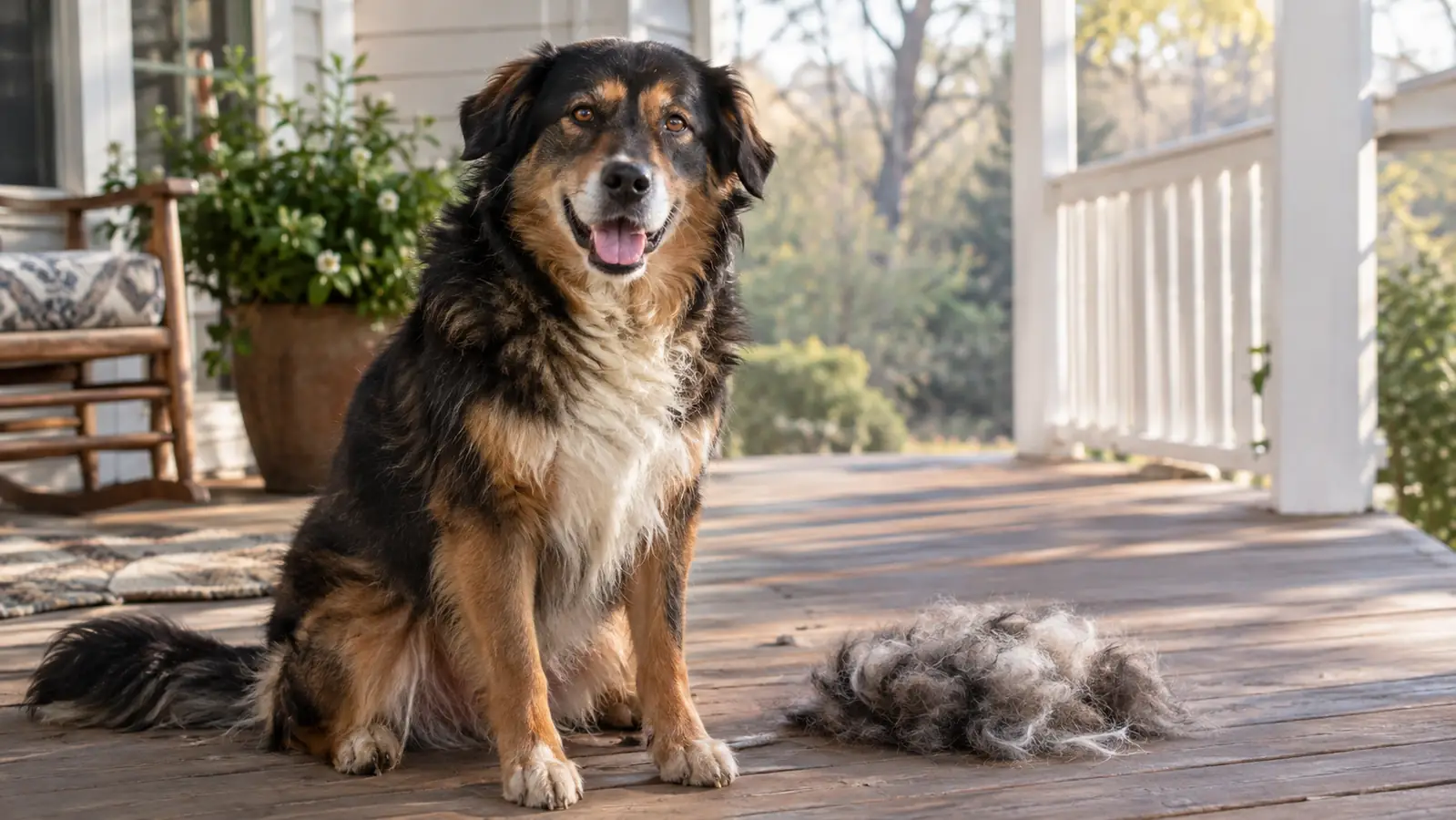
I bought the FURminator Large Dog Undercoat deShedding Tool for Long Hair back in March, and I have strong opinions about it now. Biscuit, our seven-year-old shepherd mix, sheds like it is his part-time job. The fur coats the couch, drifts across the kitchen floor, and somehow finds its way into the coffee mugs. I have tried the rubber curry mitt, a slicker brush, a shedding blade, and about four different vacuums. The FURminator is the tool I keep reaching for, and it is also the tool I nearly gave up on after the first week.
Most reviews you will read make it sound like one pass and the shedding stops forever. That is not what happened here. What actually happened is that I had to learn how to use it, and I had to accept what it can and cannot do. This is the honest version, six months in, from a house with one very sheddy dog and one cat who would like everyone to stop making a fuss.
The Quick Verdict
The FURminator is the best deshedding tool I have used, but only if you learn the right technique and keep your expectations realistic. It cuts shedding dramatically. It does not stop it.
Amazon Check Today's Price →Ready to tame the tumbleweeds?
The FURminator Large Dog Undercoat deShedding Tool for Long Hair is the one I keep coming back to after six months of weekly grooming. Check today's price on Amazon and see if it fits your routine.
Amazon Check Today's Price on Amazon →How I've Used It
I started the way most people probably do: I watched the video, watched Biscuit's expression, and went to work on his back. Within a minute I had a mat of fur on the floor and a very suspicious dog looking at me. The first session pulled out more hair than I thought was physically possible, and I felt like a genius. Then I made the classic mistake. I kept going over the same patch, pressing harder, trying to get every last loose hair in one sitting. Biscuit started fidgeting, and the next day he had a raw spot on his hip that made me feel awful.
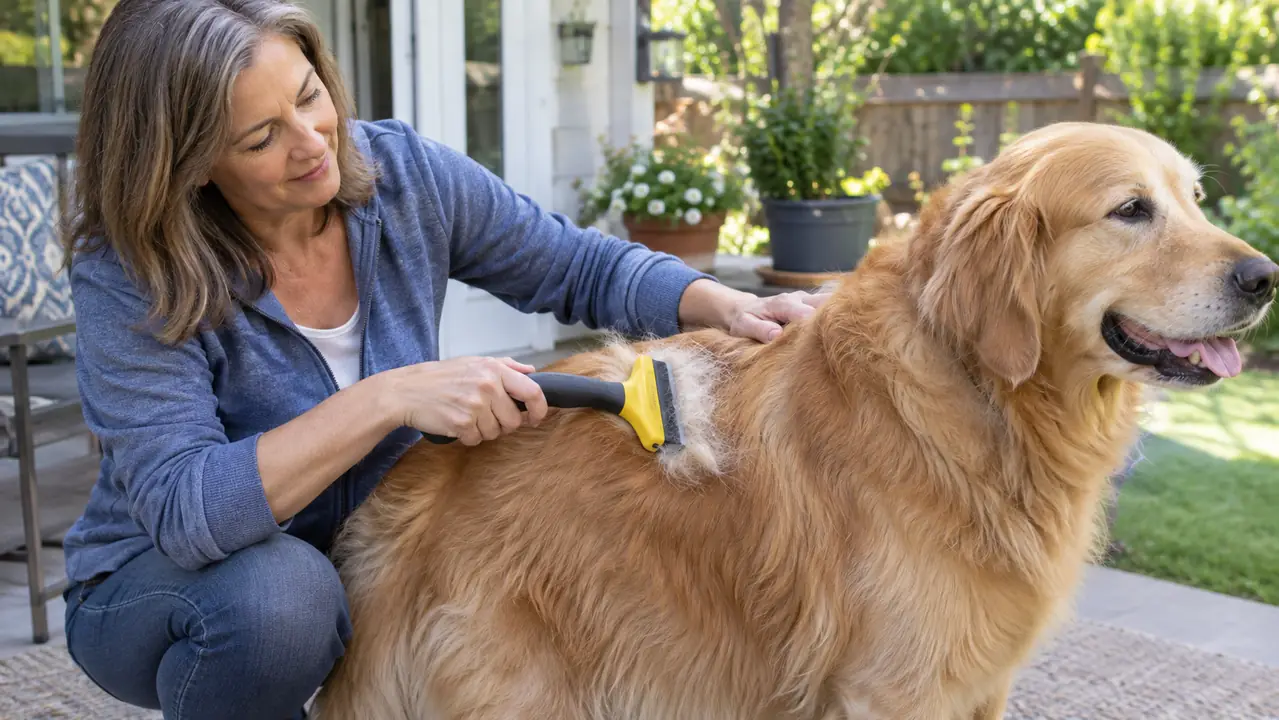
Here is what I learned the hard way. The FURminator works by reaching through the topcoat and lifting loose undercoat hairs without cutting them. That means you need light pressure, short strokes, and a lot of patience. I now brush Biscuit once a week, usually on the back porch so the fur blows away instead of settling into the carpet. I do his back, his sides, his chest, and his rear, and I stop the second he starts shifting his weight. A normal session takes about fifteen minutes and pulls a pile of fur about the size of a small loaf of bread.
I also learned that the FURminator is not a universal tool. It does not replace a slicker brush for removing mats and tangles, and it does not replace a regular pin brush for everyday grooming. Biscuit gets a quick pass with the slicker brush first to break up any tangles, then the FURminator, then a wipe-down with a damp cloth. That three-step routine is what actually keeps the shedding manageable.
What Nobody Tells You Before You Buy It
The first thing nobody tells you is that the FURminator will pull out more fur than you thought possible, and that fur goes everywhere. I thought I was prepared. I was not. The first real session on the porch left a layer of undercoat on the boards that looked like a small animal had exploded. Birds have been building impressively insulated nests with it all summer.
The second thing nobody tells you is that the handle gets slippery. I have average-size hands and the grip is fine for about ten minutes, then my palm starts to sweat and the tool starts to slide. I now keep a towel on the arm of the porch chair and wipe my hand once or twice mid-session. It is a small thing, but it is real.
The third thing is the smell. I did not expect a grooming tool to have a learning curve for my nose. When you pull out that much undercoat, you also pull out the oils and dander that were living in it. The fur pile smells like dog, and so does the tool afterward. A quick rinse with warm water and a drop of dish soap fixes it, but you have to remember to do it or the next session starts with a musty whiff.
The fourth thing is the one I wish I had read before I bought it: the FURminator is not for every dog. We have a friend whose smooth-coated dog barely sheds and the FURminator did almost nothing for her. It is built for dogs with a real undercoat. If your dog does not have one, you are going to wonder what everyone is talking about.
The first real session on the porch left a layer of undercoat on the boards that looked like a small animal had exploded.
What the FURminator Gets Right
When I use the FURminator properly, on a dog that has an undercoat, it works better than anything else I have tried. The stainless steel edge pulls out loose undercoat hair without cutting the topcoat, which matters because cutting the topcoat can make shedding worse over time. The difference between the FURminator and the rubber curry mitt is night and day. The mitt gets the surface fur. The FURminator gets the fur that was going to end up on my couch over the next two weeks.
The results are measurable in our house. Before I started using it, I was vacuuming the living room every other day and still finding fur on my clothes. Now I vacuum twice a week and the tumbleweeds under the couch are maybe a third of what they used to be. Biscuit's coat also looks better. His color is richer and his fur lies flatter, which I did not expect from a tool whose whole job is removing hair.
I also genuinely like the size and the weight. The large size fits my hand well, the blade is long enough to cover a good strip of coat with each pass, and the whole thing feels solid without being heavy. It has survived six months of weekly use, a few drops onto the porch, and one enthusiastic encounter with a dog who thought the whole thing was a game. It still works exactly as well as it did the first week.
Where the FURminator Falls Short
The biggest weakness is that the FURminator only helps if the dog has an undercoat. Pepper, our indoor tabby, has a short, fine coat and the FURminator is not the right tool for her. I tried it once, very gently, and she gave me a look that said we were not doing that again. She gets a soft slicker brush instead, and she is much happier about it.
The second weakness is that the FURminator does nothing for mats and tangles. If Biscuit has a knot behind his ear or a tangle on his rear, the FURminator will not fix it. You need to work the tangle out with your fingers or a slicker brush first, and you need to do that before the FURminator ever touches the coat. I learned this the slow way, by dragging the tool over a small mat and watching Biscuit flinch.
The third weakness is the one that almost made me quit: there is a real technique to it, and the instructions that come with the tool do not prepare you for it. The box says to brush in the direction of hair growth with light pressure. It does not tell you how easy it is to overdo it. I pressed too hard, went over the same spot too many times, and gave Biscuit a sore spot that took days to heal. That was my fault, not the tool's, but it is a mistake I have seen other owners make too.
And the fourth weakness is the one that will annoy you every single week: the cleanup. The fur comes out in big satisfying strips, which is great, but it also comes out in a fine mist of smaller hairs that lands on your clothes, your arms, and your face. I groom Biscuit on the porch and I still find fur on my shirt afterward. Wear clothes you do not care about.
What I Liked
- Removes far more loose undercoat than any other tool I have tried, including the rubber curry mitt and the shedding blade.
- The stainless steel edge pulls out undercoat without cutting the topcoat, so the coat stays healthy.
- Held up through six months of weekly use, including a few drops onto the porch, with no loss of performance.
- Cut our vacuuming from every other day to twice a week once the loose undercoat was cleared out.
- Large size covers a good strip of coat with each pass and fits my hand well.
Where It Falls Short
- There is a real learning curve: press too hard or go over one spot too many times and you can irritate the skin.
- It does nothing for mats and tangles, so you still need a slicker brush for the first pass.
- It only works on dogs with a real undercoat, which the marketing does not make clear enough.
- The handle gets slippery mid-session and the fine fur mist lands on your clothes, arms, and face.
- The tool picks up a doggy smell from the oils in the undercoat and needs a rinse after each use.
Who This Is For
The FURminator Large Dog Undercoat deShedding Tool for Long Hair is for owners of dogs with a real undercoat who are tired of living inside a fur storm. If you have a shepherd, a husky, a retriever, a collie, or any mixed breed with that dense double coat, the FURminator will change your weekly routine. It is also for people who are willing to spend ten to fifteen minutes learning the right pressure and stroke. The tool does the work, but you have to do the technique.
It is also for people who can handle the mess. This is not a neat little brush that collects fur in a tidy compartment. It is a serious grooming tool that produces serious amounts of fur, and you need a plan for where that fur is going to go. A porch, a yard, or a garage works great. A white living room rug does not.
Who Should Skip It
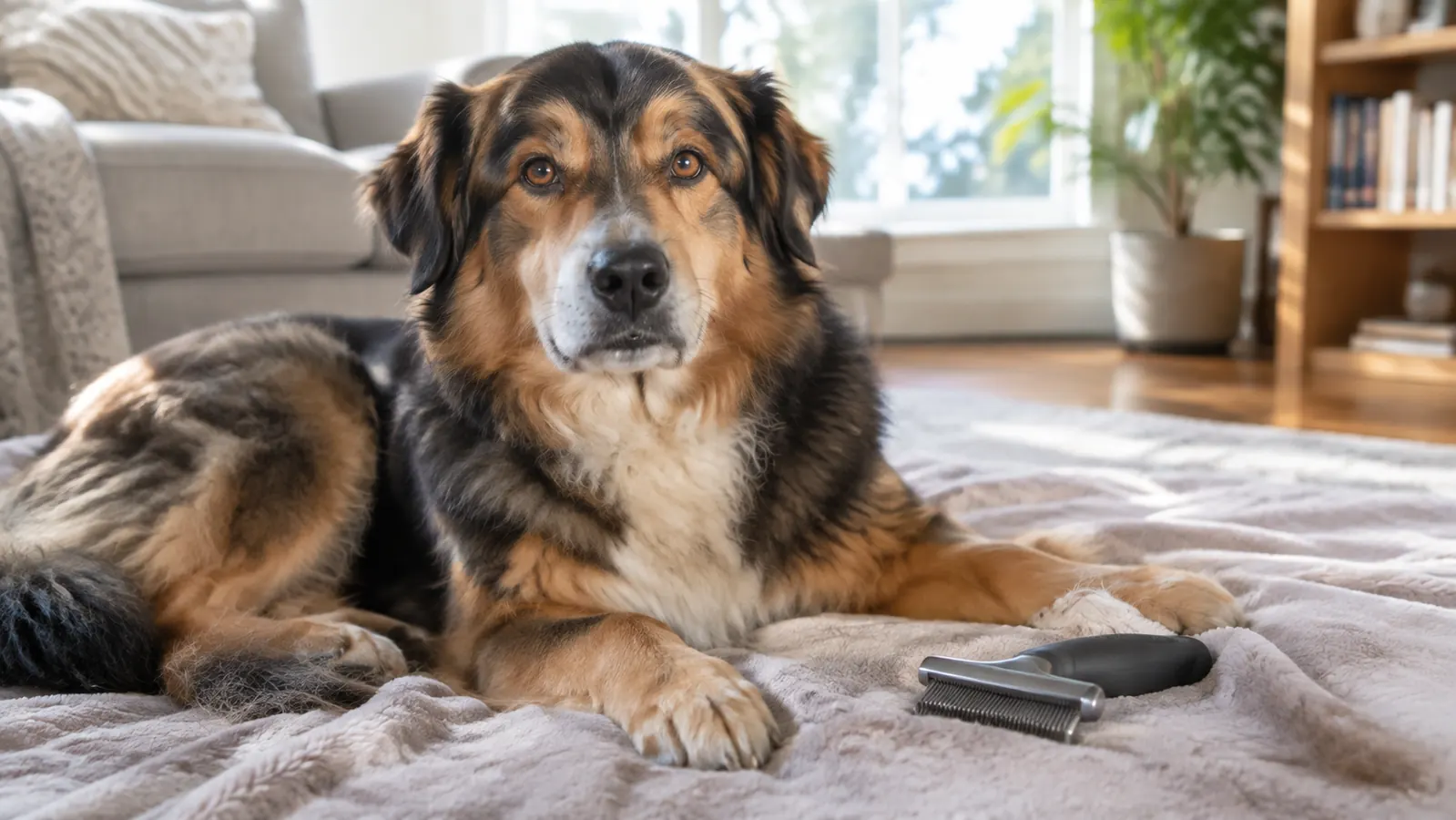
Skip the FURminator if your dog has a single-layer coat with no real undercoat. Smooth-coated breeds, short-haired dogs that barely shed, and any dog whose fur comes out only in small amounts will not benefit much. You will use it twice, wonder what the fuss is about, and put it in a drawer.
Skip it if you are not going to commit to a regular routine. Using the FURminator once a month does almost nothing. The shedding reduction in our house only showed up after I started doing it weekly, and even then it took about a month to catch up with the loose undercoat that was already building up. This is a maintenance tool, not a one-time fix.
And absolutely skip it if you are looking for a tool you can use without thinking. The FURminator requires attention, light pressure, and the ability to stop when your dog has had enough. If you want a quick pass with no learning curve, a rubber curry mitt is the easier tool. It just will not remove anywhere near as much fur.
Alternatives I Considered
Before I settled on the FURminator, I tried the rubber curry mitt, a standard slicker brush, a shedding blade, and a friend's knockoff deshedding tool. The curry mitt is fine for a quick once-over but it only catches surface fur. The slicker brush is essential for mats but it does not pull out the undercoat the way the FURminator does. The shedding blade worked well on Biscuit's rear but felt harsh on his more sensitive areas, and I never got comfortable with it.
The knockoff was the most interesting comparison. It cost a good deal less and looked almost identical, but the edge was not as smooth and the handle felt cheaper. It also seemed to catch and pull on Biscuit's topcoat in a way the FURminator does not. I cannot say for certain it was cutting hairs, but it did not feel right, so I stopped using it. I would rather pay more for a tool I trust, especially when I am running it over my dog's skin.
Questions I'd Ask Before You Buy
Does your dog actually have an undercoat? This is the single most important question, and it determines whether the FURminator will be a revelation or a disappointment. If you are not sure, ask your vet or a groomer. They can tell you in about five seconds.
Are you comfortable grooming your dog regularly? If the answer is no, the FURminator will not magically change your habits. It makes the job faster and more effective, but it is still a job, and it still needs to happen every week during heavy shedding seasons.
And finally, do you have a place to groom that can handle a blizzard of fur? If you are in an apartment with no balcony and a strict carpet policy, you will need to plan ahead. A shower stall with a drain works, and so does a large sheet you can shake out outside.
The Bottom Line
The FURminator Large Dog Undercoat deShedding Tool for Long Hair is the best deshedding tool I have used, and I have used a lot of them. It removed more loose undercoat from Biscuit than every other tool combined, it has held up through six months of weekly use, and it genuinely cut the amount of fur floating around our house. It is also a tool with real limitations: it does nothing for mats, it does nothing for dogs without an undercoat, and it demands a technique that the instructions do not adequately teach.
Would I buy it again? Yes. I would buy it again and I would start with the lighter pressure and the weekly routine instead of the all-at-once approach that gave my dog a sore spot. If you have a double-coated dog and you are willing to learn the technique, this is the tool I would recommend to a friend. Just keep your expectations honest: it makes the shedding manageable, and it does not make it disappear.
For anything medical, from that raw spot on Biscuit's hip to a sudden change in shedding, ask your vet. A grooming tool is not a treatment, and it is not a diagnosis. It is just a very good way to keep your house from disappearing under a layer of fur.
If your dog has an undercoat, this is the tool I would buy again
Six months in, the FURminator still earns its spot in my grooming drawer. Check today's price on Amazon and see if it fits your dog's coat type.
Amazon Check Today's Price on Amazon →